Heirlooms to Avoid Keeping

Some belongings left behind after a loved one’s passing bring comfort, while others carry emotional weight that can make healing harder. Across cultures, many believe personal items hold strong associations that keep grief active instead of allowing peace to settle.

Whether understood spiritually or psychologically, the idea is similar: our surroundings influence how we feel. The objects we see daily can either soothe us or quietly reopen wounds. Being mindful about what we keep can support emotional balance.

After a loss, it is natural to want to hold onto everything. Each item can feel like a connection to the person we miss. Yet not every possession continues to serve a healthy purpose over time.

Certain belongings are often more difficult to keep without stirring pain. Very personal clothing, mirrors strongly associated with the deceased, or jewelry kept only out of obligation can feel heavy rather than comforting.

Religious or sentimental objects that once felt meaningful may also lose their sense of peace. When items no longer bring warmth, they may unintentionally anchor grief instead of encouraging healing.

Many people choose to donate, redesign, or respectfully release belongings that feel burdensome. Passing items on can transform them into acts of generosity while preserving the positive memories attached to them.

Letting go of objects does not mean letting go of love. Memories, lessons, and shared experiences remain part of us, regardless of what we keep in our homes.

In the end, honoring someone’s life is not about preserving every possession they owned. It is about carrying forward their warmth, values, and meaning while creating a space that allows healing to gently unfold.


Related Posts

Singing Just for You Today”: Sweet Moment Leaves Viewers Smiling ❤️🎤

Singing Just for You Today”: Sweet Moment Leaves Viewers Smiling ❤️🎤

A short, heartwarming clip is bringing smiles across social media as a young voice shares a simple but uplifting message: singing “just for you today.” In the…

My Husband Told Me “If You Want to Eat, Pay for Your Own Food” — So I Turned Off the Stove on His Birthday

My Husband Told Me “If You Want to Eat, Pay for Your Own Food” — So I Turned Off the Stove on His Birthday

Richard’s birthday was supposed to be a celebration, but it quickly became a turning point in our relationship. His entire family arrived expecting a homemade feast, yet the kitchen was… CONTINUE READING

The Stranger at My Table: The Secret My Mother Kept for 20 Years Will Leave You Speechless

The Stranger at My Table: The Secret My Mother Kept for 20 Years Will Leave You Speechless

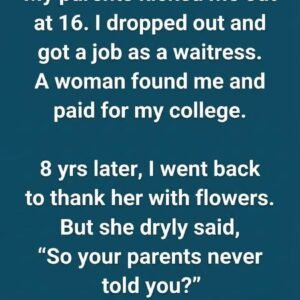
I stood there trembling, holding flowers, as a family friend finally revealed a truth that shattered everything I believed about my childhood. For twenty years, I had carried the pain… CONTINUE READING

After I Lost My Job, My Husband Demanded We Split Everything 50/50—Then I Discovered Secrets

After I Lost My Job, My Husband Demanded We Split Everything 50/50—Then I Discovered Secrets

Elena never expected losing her job to change her marriage. After being laid off, she returned home hoping for support from her husband, Thomas, after eight years together. Instead, she… CONTINUE READING

Why More Drivers Are Displaying Upside-Down State Flags—and What It Means

Why More Drivers Are Displaying Upside-Down State Flags—and What It Means

If you’ve driven through the Pacific Northwest, you may have noticed an upside-down outline of Washington State on some vehicles. It often looks like a mistake at first, but it’s… CONTINUE READING

Why Some Wall Outlets Are Installed Upside Down: The Practical Reason Behind It

Why Some Wall Outlets Are Installed Upside Down: The Practical Reason Behind It

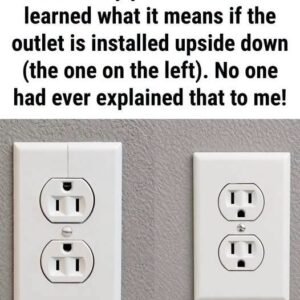
If you’ve ever seen a wall outlet with the ground hole facing upward, it might look like a mistake—but it often isn’t. In many cases, the orientation is intentional and… CONTINUE READING