Inside Iran’s 10-Point Proposal—What It Could Mean for U.S. Relations

A temporary ceasefire between the United States and Iran brought something the previous days lacked: a pause. Not a solution or agreement, but a slowing of momentum in a situation where rapid decisions can quickly escalate tensions. In moments like this, speed often drives events forward faster than anyone can fully understand the consequences, and a ceasefire interrupts that pattern long enough for clearer thinking to emerge.

This pause doesn’t resolve deeper issues, but it creates room for reassessment. It allows each side to step back, review the situation, and consider approaches that aren’t driven solely by urgency. Even a brief break can shift the tone of decision-making in ways that matter.

The proposal being discussed—described as a “workable basis”—has drawn mixed reactions. Some believe it concedes too much, while others see it as necessary to bring both sides into the same negotiating space. Early proposals are rarely final; they serve as starting points meant to test whether progress is possible.

Quiet mediation has also played a role. Several countries reportedly worked behind the scenes to help secure the pause. These efforts seldom make headlines, but they often create the conditions for visible movement. In high-pressure situations, quieter channels can be surprisingly influential.

Reactions to the ceasefire vary. Some people welcome the immediate reduction in risk and the breathing room it provides. Others worry that it merely postpones conflict or shifts leverage. Both perspectives reflect an understanding that nothing is settled yet.

Two weeks is a short window, but it is long enough to reveal intent. Whether this pause leads to stability or simply offers time to regroup will become clear soon. What matters most is how the opportunity is used.

A ceasefire is not peace. But it offers a chance to choose direction before momentum chooses it for everyone.


Related Posts

Singing Just for You Today”: Sweet Moment Leaves Viewers Smiling ❤️🎤

Singing Just for You Today”: Sweet Moment Leaves Viewers Smiling ❤️🎤

A short, heartwarming clip is bringing smiles across social media as a young voice shares a simple but uplifting message: singing “just for you today.” In the…

My Husband Told Me “If You Want to Eat, Pay for Your Own Food” — So I Turned Off the Stove on His Birthday

My Husband Told Me “If You Want to Eat, Pay for Your Own Food” — So I Turned Off the Stove on His Birthday

Richard’s birthday was supposed to be a celebration, but it quickly became a turning point in our relationship. His entire family arrived expecting a homemade feast, yet the kitchen was… CONTINUE READING

The Stranger at My Table: The Secret My Mother Kept for 20 Years Will Leave You Speechless

The Stranger at My Table: The Secret My Mother Kept for 20 Years Will Leave You Speechless

I stood there trembling, holding flowers, as a family friend finally revealed a truth that shattered everything I believed about my childhood. For twenty years, I had carried the pain… CONTINUE READING

After I Lost My Job, My Husband Demanded We Split Everything 50/50—Then I Discovered Secrets

After I Lost My Job, My Husband Demanded We Split Everything 50/50—Then I Discovered Secrets

Elena never expected losing her job to change her marriage. After being laid off, she returned home hoping for support from her husband, Thomas, after eight years together. Instead, she… CONTINUE READING

Why More Drivers Are Displaying Upside-Down State Flags—and What It Means

Why More Drivers Are Displaying Upside-Down State Flags—and What It Means

If you’ve driven through the Pacific Northwest, you may have noticed an upside-down outline of Washington State on some vehicles. It often looks like a mistake at first, but it’s… CONTINUE READING

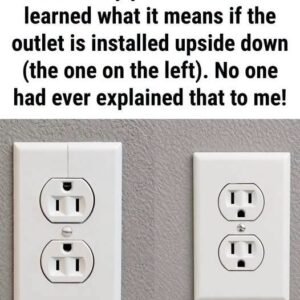
Why Some Wall Outlets Are Installed Upside Down: The Practical Reason Behind It

Why Some Wall Outlets Are Installed Upside Down: The Practical Reason Behind It

If you’ve ever seen a wall outlet with the ground hole facing upward, it might look like a mistake—but it often isn’t. In many cases, the orientation is intentional and… CONTINUE READING