Pulled my beef roast out of the slow cooker and saw these weird white stringy things poking out of the meat. They look like little worms or parasites. Is the meat infested?

If you’ve ever pulled a slow-cooked roast from the pot and noticed thin, white, stringy strands in the meat, it can definitely catch you off guard. At first glance, they can look unusual—sometimes even unsettling—but in most cases, they’re completely normal and actually a sign that your cooking method worked perfectly.

What you’re seeing is connective tissue, mainly collagen, that has broken down during the long, slow cooking process. Cuts like chuck, brisket, or shoulder naturally contain a lot of this tissue. When cooked quickly, collagen stays tough and chewy. But when exposed to low heat and moisture over several hours, it transforms into a soft, gelatin-like substance. That’s what creates those pale strands—and also what makes the meat so tender.

The reason it can look concerning is purely visual. The strands are thin, light-colored, and irregular, which can resemble something unfamiliar. But there are clear differences between this and anything harmful. These collagen strands are soft, slippery, and blend into the meat. They don’t have structure, movement, or defined shape like parasites would. And importantly, the temperatures reached during slow cooking are more than enough to eliminate any real food safety risks.

If your roast smells normal, looks fully cooked, and was handled properly before cooking, it’s safe to eat. In fact, those strands contribute to the rich texture and flavor people love in slow-cooked meals.

If you prefer a smoother texture, you can trim visible connective tissue before cooking or shred the meat afterward so everything blends together naturally. But there’s no need to worry—they’re part of what makes slow cooking so effective.

In simple terms, those “strange” strings aren’t a problem—they’re proof your roast turned out exactly as it should.


Related Posts

Singing Just for You Today”: Sweet Moment Leaves Viewers Smiling ❤️🎤

Singing Just for You Today”: Sweet Moment Leaves Viewers Smiling ❤️🎤

A short, heartwarming clip is bringing smiles across social media as a young voice shares a simple but uplifting message: singing “just for you today.” In the…

My Husband Told Me “If You Want to Eat, Pay for Your Own Food” — So I Turned Off the Stove on His Birthday

My Husband Told Me “If You Want to Eat, Pay for Your Own Food” — So I Turned Off the Stove on His Birthday

Richard’s birthday was supposed to be a celebration, but it quickly became a turning point in our relationship. His entire family arrived expecting a homemade feast, yet the kitchen was… CONTINUE READING

The Stranger at My Table: The Secret My Mother Kept for 20 Years Will Leave You Speechless

The Stranger at My Table: The Secret My Mother Kept for 20 Years Will Leave You Speechless

I stood there trembling, holding flowers, as a family friend finally revealed a truth that shattered everything I believed about my childhood. For twenty years, I had carried the pain… CONTINUE READING

After I Lost My Job, My Husband Demanded We Split Everything 50/50—Then I Discovered Secrets

After I Lost My Job, My Husband Demanded We Split Everything 50/50—Then I Discovered Secrets

Elena never expected losing her job to change her marriage. After being laid off, she returned home hoping for support from her husband, Thomas, after eight years together. Instead, she… CONTINUE READING

Why More Drivers Are Displaying Upside-Down State Flags—and What It Means

Why More Drivers Are Displaying Upside-Down State Flags—and What It Means

If you’ve driven through the Pacific Northwest, you may have noticed an upside-down outline of Washington State on some vehicles. It often looks like a mistake at first, but it’s… CONTINUE READING

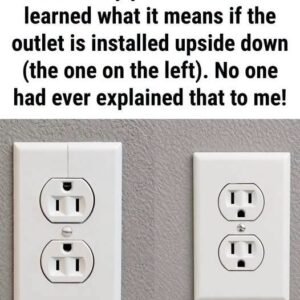
Why Some Wall Outlets Are Installed Upside Down: The Practical Reason Behind It

Why Some Wall Outlets Are Installed Upside Down: The Practical Reason Behind It

If you’ve ever seen a wall outlet with the ground hole facing upward, it might look like a mistake—but it often isn’t. In many cases, the orientation is intentional and… CONTINUE READING