A HIGHWAY TO HELL, THE EXPLOSIVE DISASTER THAT LEFT MEXICO CITY REELING AND DOZENS DEAD

Most people handle paper money every day without giving much thought to the small details printed or marked on each bill. We recognize the denomination, complete a purchase, and move on. However, every so often, a bill may display an unusual symbol, such as a star, stamp, or handwritten mark, prompting questions about whether it is damaged, counterfeit, or somehow less valuable.

One of the most interesting markings that can appear on currency is known as a “chop mark.” These marks have a long history that dates back centuries, particularly in international trade. Before the development of modern banking systems and advanced methods of verifying money, merchants needed a reliable way to confirm that coins made of precious metals were genuine. After testing a coin’s authenticity, they would stamp it with a unique personal symbol or seal, indicating it had been inspected and accepted.

As coins circulated from one trader to another, they often collected multiple chop marks. Rather than reducing the coin’s value, these markings frequently increased confidence in its authenticity because several experienced merchants had already verified it.

When paper currency became more common, similar practices occasionally continued. In some regions, merchants, money changers, and financial businesses placed small ink stamps on banknotes after inspecting and accepting them. As the U.S. dollar became widely used around the world, these marks appeared on some bills that traveled through international markets. Each stamp represented a merchant, exchange office, or business that had handled the note, serving as a record of its journey.

Today, these markings are still occasionally found on older or widely circulated bills. In most cases, they do not affect the bill’s face value, although excessive damage or defacement can. For collectors, however, genuine chop marks may add historical interest by revealing the remarkable path a single piece of currency has taken through global commerce. What may appear to be an ordinary stamp can actually tell the story of decades of trade, trust, and economic history.


Related Posts

Singing Just for You Today”: Sweet Moment Leaves Viewers Smiling ❤️🎤

Singing Just for You Today”: Sweet Moment Leaves Viewers Smiling ❤️🎤

A short, heartwarming clip is bringing smiles across social media as a young voice shares a simple but uplifting message: singing “just for you today.” In the…

My Husband Told Me “If You Want to Eat, Pay for Your Own Food” — So I Turned Off the Stove on His Birthday

My Husband Told Me “If You Want to Eat, Pay for Your Own Food” — So I Turned Off the Stove on His Birthday

Richard’s birthday was supposed to be a celebration, but it quickly became a turning point in our relationship. His entire family arrived expecting a homemade feast, yet the kitchen was… CONTINUE READING

The Stranger at My Table: The Secret My Mother Kept for 20 Years Will Leave You Speechless

The Stranger at My Table: The Secret My Mother Kept for 20 Years Will Leave You Speechless

I stood there trembling, holding flowers, as a family friend finally revealed a truth that shattered everything I believed about my childhood. For twenty years, I had carried the pain… CONTINUE READING

After I Lost My Job, My Husband Demanded We Split Everything 50/50—Then I Discovered Secrets

After I Lost My Job, My Husband Demanded We Split Everything 50/50—Then I Discovered Secrets

Elena never expected losing her job to change her marriage. After being laid off, she returned home hoping for support from her husband, Thomas, after eight years together. Instead, she… CONTINUE READING

Why More Drivers Are Displaying Upside-Down State Flags—and What It Means

Why More Drivers Are Displaying Upside-Down State Flags—and What It Means

If you’ve driven through the Pacific Northwest, you may have noticed an upside-down outline of Washington State on some vehicles. It often looks like a mistake at first, but it’s… CONTINUE READING

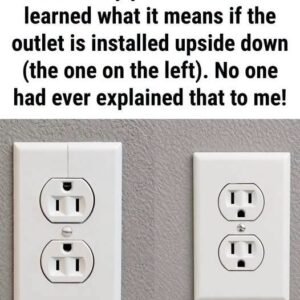
Why Some Wall Outlets Are Installed Upside Down: The Practical Reason Behind It

Why Some Wall Outlets Are Installed Upside Down: The Practical Reason Behind It

If you’ve ever seen a wall outlet with the ground hole facing upward, it might look like a mistake—but it often isn’t. In many cases, the orientation is intentional and… CONTINUE READING