A Viral ICU Rescue Clip Wasn’t What It Seemed

A tense hospital video recently spread across social media, showing what appeared to be a nurse rushing to save an unconscious patient in an intensive care setting.

The scene looked real—monitors, medical equipment, and urgent movements under pressure—leading many viewers to believe they were witnessing an actual emergency.

As the clip circulated, reactions poured in. Some praised the nurse’s apparent effort, while others questioned whether the actions matched real medical practice.

The uncertainty quickly grew, turning the video into a wider conversation about trust and how easily emotion can shape belief online.

Later, the full context emerged. The footage was not from a real hospital emergency but a staged advertisement for an energy-boosting product.

The “patient” was an actor, and the dramatic scenario had been created to symbolize exhaustion and recovery, not to document real care.

While the campaign succeeded in capturing attention, it also sparked criticism for blurring the line between fiction and reality by using a medical setting.

Healthcare scenes carry weight because they involve trust, safety, and life-or-death situations, making them especially sensitive in public perception.

For some viewers, the ad felt uncomfortable, as it borrowed from the reality of nurses and medical teams who face genuine high-pressure situations daily.

Intensive care professionals work in demanding environments where skill, coordination, and endurance are critical, and their role is not easily replicated in scripted content.

The viral response highlights how quickly people react to emotionally charged visuals, especially when context is missing.

It also underscores the responsibility creators have when using realistic scenarios that can be mistaken for real events.

Ultimately, the clip serves as a reminder to pause before reacting to what we see online.

In a fast-moving digital space, checking sources, reading context, and questioning intent are essential to understanding what is real and what is staged.


Related Posts

Singing Just for You Today”: Sweet Moment Leaves Viewers Smiling ❤️🎤

Singing Just for You Today”: Sweet Moment Leaves Viewers Smiling ❤️🎤

A short, heartwarming clip is bringing smiles across social media as a young voice shares a simple but uplifting message: singing “just for you today.” In the…

My Husband Told Me “If You Want to Eat, Pay for Your Own Food” — So I Turned Off the Stove on His Birthday

My Husband Told Me “If You Want to Eat, Pay for Your Own Food” — So I Turned Off the Stove on His Birthday

Richard’s birthday was supposed to be a celebration, but it quickly became a turning point in our relationship. His entire family arrived expecting a homemade feast, yet the kitchen was… CONTINUE READING

The Stranger at My Table: The Secret My Mother Kept for 20 Years Will Leave You Speechless

The Stranger at My Table: The Secret My Mother Kept for 20 Years Will Leave You Speechless

I stood there trembling, holding flowers, as a family friend finally revealed a truth that shattered everything I believed about my childhood. For twenty years, I had carried the pain… CONTINUE READING

After I Lost My Job, My Husband Demanded We Split Everything 50/50—Then I Discovered Secrets

After I Lost My Job, My Husband Demanded We Split Everything 50/50—Then I Discovered Secrets

Elena never expected losing her job to change her marriage. After being laid off, she returned home hoping for support from her husband, Thomas, after eight years together. Instead, she… CONTINUE READING

Why More Drivers Are Displaying Upside-Down State Flags—and What It Means

Why More Drivers Are Displaying Upside-Down State Flags—and What It Means

If you’ve driven through the Pacific Northwest, you may have noticed an upside-down outline of Washington State on some vehicles. It often looks like a mistake at first, but it’s… CONTINUE READING

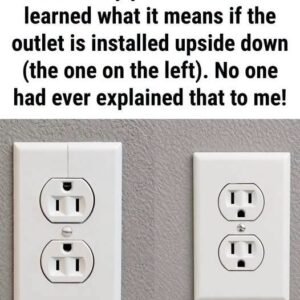
Why Some Wall Outlets Are Installed Upside Down: The Practical Reason Behind It

Why Some Wall Outlets Are Installed Upside Down: The Practical Reason Behind It

If you’ve ever seen a wall outlet with the ground hole facing upward, it might look like a mistake—but it often isn’t. In many cases, the orientation is intentional and… CONTINUE READING