Billie Eilish opened up about ‘exhausting’ Tourette’s syndrome diagnosis

Billie Eilish has spoken openly about living with Tourette syndrome, describing it as physically and emotionally exhausting. She first noticed symptoms as a child and was officially diagnosed at age eleven. Tourette syndrome is a neurological condition that causes sudden, repetitive movements or sounds called tics, which a person cannot fully control.

These tics can include blinking, muscle movements, or vocal sounds. During an interview on My Next Guest Needs No Introduction with David Letterman, Eilish explained that people sometimes misunderstand her tics, assuming she is joking or making deliberate movements. This reaction can be frustrating because the condition is often invisible to those who do not know what to look for.

Eilish also shared that many of her tics are subtle, such as moving her ear muscles, raising her eyebrows, or flexing her arms and jaw. Though these movements may go unnoticed by others, constantly managing them can be tiring.

Tourette syndrome varies widely from person to person, and symptoms can intensify during stress, excitement, or fatigue. Managing these tics requires ongoing awareness and coping strategies, even in everyday situations.

Another musician who has spoken publicly about Tourette syndrome is Lewis Capaldi. Like Eilish, he has raised awareness while continuing to pursue a demanding music career, showing that the condition does not prevent success.

By sharing her experiences, Billie Eilish has helped increase public understanding of Tourette syndrome. Her openness encourages conversations about neurological health and reduces stigma around invisible conditions.

Eilish’s willingness to speak honestly about her challenges also reminds fans that even globally successful performers face personal struggles. Her story provides comfort and representation for those living with similar conditions.

Ultimately, Eilish’s advocacy highlights the importance of empathy, awareness, and support for neurological disorders. Through her platform, she has inspired broader recognition and understanding of Tourette syndrome, helping others feel less alone.


Related Posts

Singing Just for You Today”: Sweet Moment Leaves Viewers Smiling ❤️🎤

Singing Just for You Today”: Sweet Moment Leaves Viewers Smiling ❤️🎤

A short, heartwarming clip is bringing smiles across social media as a young voice shares a simple but uplifting message: singing “just for you today.” In the…

My Husband Told Me “If You Want to Eat, Pay for Your Own Food” — So I Turned Off the Stove on His Birthday

My Husband Told Me “If You Want to Eat, Pay for Your Own Food” — So I Turned Off the Stove on His Birthday

Richard’s birthday was supposed to be a celebration, but it quickly became a turning point in our relationship. His entire family arrived expecting a homemade feast, yet the kitchen was… CONTINUE READING

The Stranger at My Table: The Secret My Mother Kept for 20 Years Will Leave You Speechless

The Stranger at My Table: The Secret My Mother Kept for 20 Years Will Leave You Speechless

I stood there trembling, holding flowers, as a family friend finally revealed a truth that shattered everything I believed about my childhood. For twenty years, I had carried the pain… CONTINUE READING

After I Lost My Job, My Husband Demanded We Split Everything 50/50—Then I Discovered Secrets

After I Lost My Job, My Husband Demanded We Split Everything 50/50—Then I Discovered Secrets

Elena never expected losing her job to change her marriage. After being laid off, she returned home hoping for support from her husband, Thomas, after eight years together. Instead, she… CONTINUE READING

Why More Drivers Are Displaying Upside-Down State Flags—and What It Means

Why More Drivers Are Displaying Upside-Down State Flags—and What It Means

If you’ve driven through the Pacific Northwest, you may have noticed an upside-down outline of Washington State on some vehicles. It often looks like a mistake at first, but it’s… CONTINUE READING

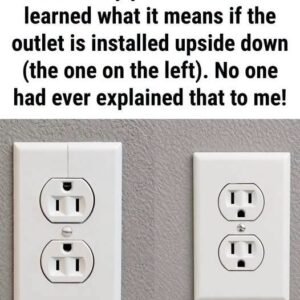
Why Some Wall Outlets Are Installed Upside Down: The Practical Reason Behind It

Why Some Wall Outlets Are Installed Upside Down: The Practical Reason Behind It

If you’ve ever seen a wall outlet with the ground hole facing upward, it might look like a mistake—but it often isn’t. In many cases, the orientation is intentional and… CONTINUE READING