If a military draft ever occurred, certain medical conditions could lead to exemption from service. Common examples include serious heart conditions, severe mental health disorders, and chronic physical disabilities that prevent active duty. Military evaluations review each case carefully, determining whether a person’s health allows safe participation in training and combat responsibilities

Rising tensions in the Middle East have renewed global fears about a wider conflict after reports that the United States and Israel carried out coordinated airstrikes on targets in Iran in late February. Some reports claimed the attacks killed Iranian Supreme Leader Ali Khamenei, which—if confirmed—would mark a dramatic escalation in regional tensions.

Following the alleged strikes, Iran reportedly launched retaliatory missiles toward Israeli positions and key economic hubs across the Gulf region, including Dubai and Abu Dhabi. The rapid exchange of attacks intensified fears that the crisis could expand into a broader regional or global confrontation.

As governments closely watch developments, many citizens are questioning what a larger war could mean for them personally. In the United States, one recurring concern is whether the government might eventually reinstate the military draft if troop levels were needed for a major conflict.

Although the U.S. has not used conscription since 1973, the legal framework still exists. Under federal law, most American men aged 18 to 25 must register with the Selective Service System, which maintains records in case a draft is ever required during a national emergency.

Registration does not mean someone will automatically be drafted, but it ensures the government could mobilize potential recruits quickly if Congress and the president authorized conscription. For decades the system has remained inactive, yet geopolitical tensions often revive public debate about its role.

Even if a draft were reinstated, not everyone would qualify for military service. The U.S. military applies strict medical and psychological standards to ensure recruits can handle the physical and mental demands of training and combat.

Certain mental health conditions—including schizophrenia, bipolar disorder, severe anxiety disorders, and substance abuse issues—may disqualify individuals. A history of suicide attempts or violent behavior may also prevent someone from serving because of the intense psychological pressures of military operations.

Physical health factors also play a major role. Conditions such as heart disease, seizure disorders, serious lung problems, diabetes requiring insulin, or severe orthopedic injuries may lead to disqualification. Final decisions are made through detailed evaluations at Military Entrance Processing Stations before any recruit can enter training.


Related Posts

Singing Just for You Today”: Sweet Moment Leaves Viewers Smiling ❤️🎤

Singing Just for You Today”: Sweet Moment Leaves Viewers Smiling ❤️🎤

A short, heartwarming clip is bringing smiles across social media as a young voice shares a simple but uplifting message: singing “just for you today.” In the…

My Husband Told Me “If You Want to Eat, Pay for Your Own Food” — So I Turned Off the Stove on His Birthday

My Husband Told Me “If You Want to Eat, Pay for Your Own Food” — So I Turned Off the Stove on His Birthday

Richard’s birthday was supposed to be a celebration, but it quickly became a turning point in our relationship. His entire family arrived expecting a homemade feast, yet the kitchen was… CONTINUE READING

The Stranger at My Table: The Secret My Mother Kept for 20 Years Will Leave You Speechless

The Stranger at My Table: The Secret My Mother Kept for 20 Years Will Leave You Speechless

I stood there trembling, holding flowers, as a family friend finally revealed a truth that shattered everything I believed about my childhood. For twenty years, I had carried the pain… CONTINUE READING

After I Lost My Job, My Husband Demanded We Split Everything 50/50—Then I Discovered Secrets

After I Lost My Job, My Husband Demanded We Split Everything 50/50—Then I Discovered Secrets

Elena never expected losing her job to change her marriage. After being laid off, she returned home hoping for support from her husband, Thomas, after eight years together. Instead, she… CONTINUE READING

Why More Drivers Are Displaying Upside-Down State Flags—and What It Means

Why More Drivers Are Displaying Upside-Down State Flags—and What It Means

If you’ve driven through the Pacific Northwest, you may have noticed an upside-down outline of Washington State on some vehicles. It often looks like a mistake at first, but it’s… CONTINUE READING

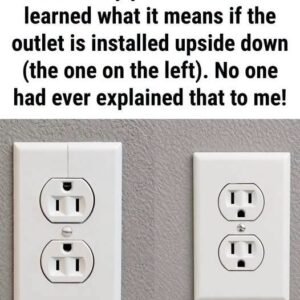
Why Some Wall Outlets Are Installed Upside Down: The Practical Reason Behind It

Why Some Wall Outlets Are Installed Upside Down: The Practical Reason Behind It

If you’ve ever seen a wall outlet with the ground hole facing upward, it might look like a mistake—but it often isn’t. In many cases, the orientation is intentional and… CONTINUE READING